

Playback is unavailable here. Open video ↗
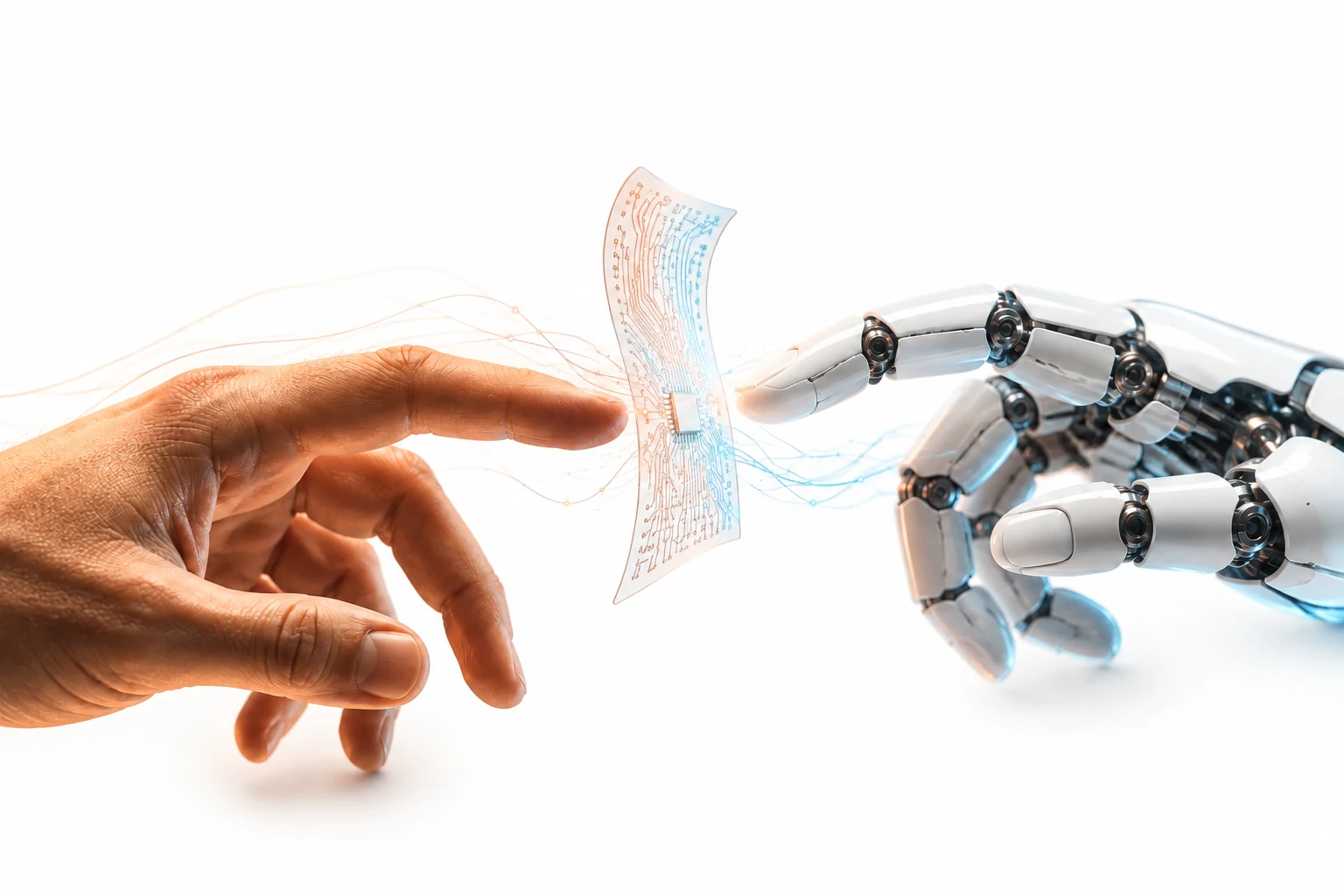
We print materials that sense touch, store information, and supply energy — building the foundations of flexible interfaces between people and robots.
How can a material sense a touch, hold information or supply energy? Bring your questions to PPEL. We welcome graduate students who want to explore printed electronics and the interfaces between people and robots.
Tap a tile to jump to that section.
We explore sensing, information storage and energy as building blocks for human–machine interfaces. Each study below develops or examines a part of this wider vision of connecting people and robots.
Playback is unavailable here. Open video ↗
Our research connects materials science and printed electronics with the wider vision of human–robot interaction. We study flexible sensing, biosensors, information storage and energy devices, alongside AI-assisted analysis and printing processes. These individual research directions inform the interfaces that may connect people and machines.
An international research community of postdoctoral researchers, doctoral students, and undergraduate students.


Selected from 127 peer-reviewed papers published since 2016 · journal IF > 10 or JCR top 10% in its field. Browse by year.
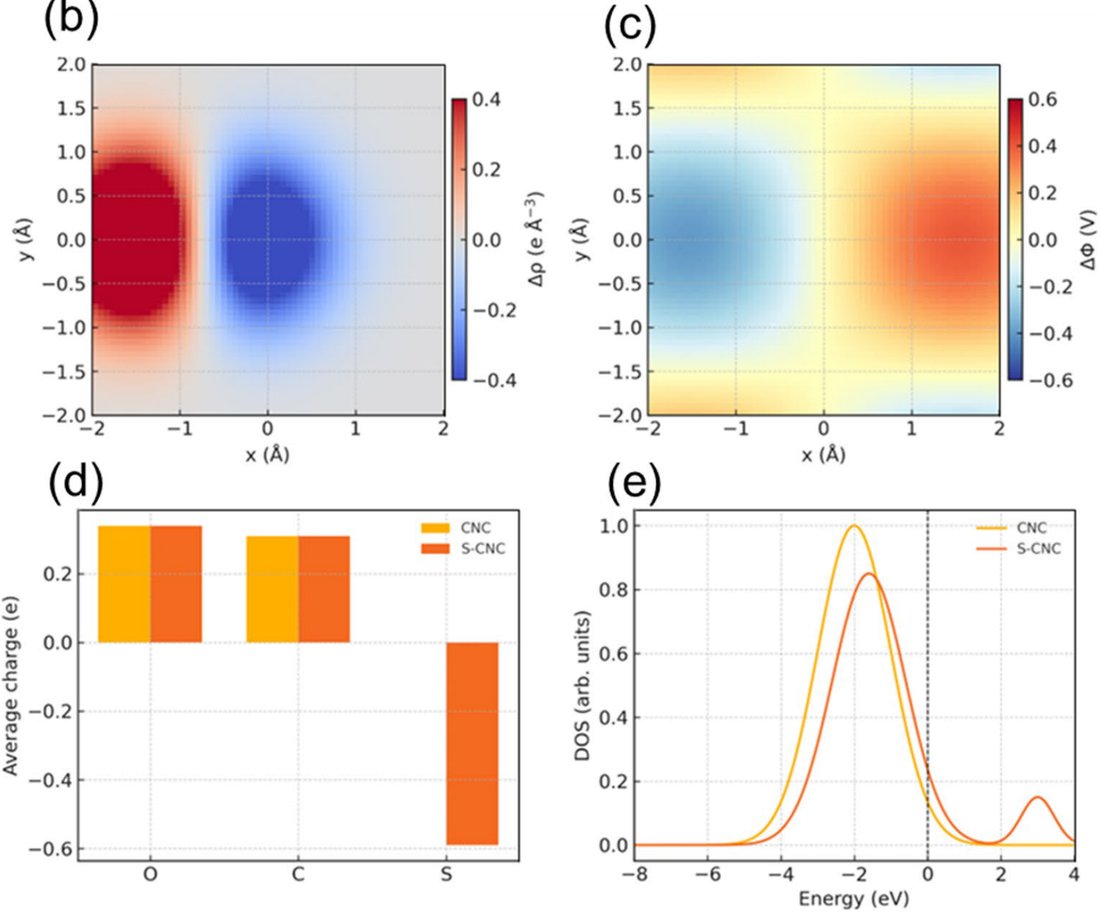
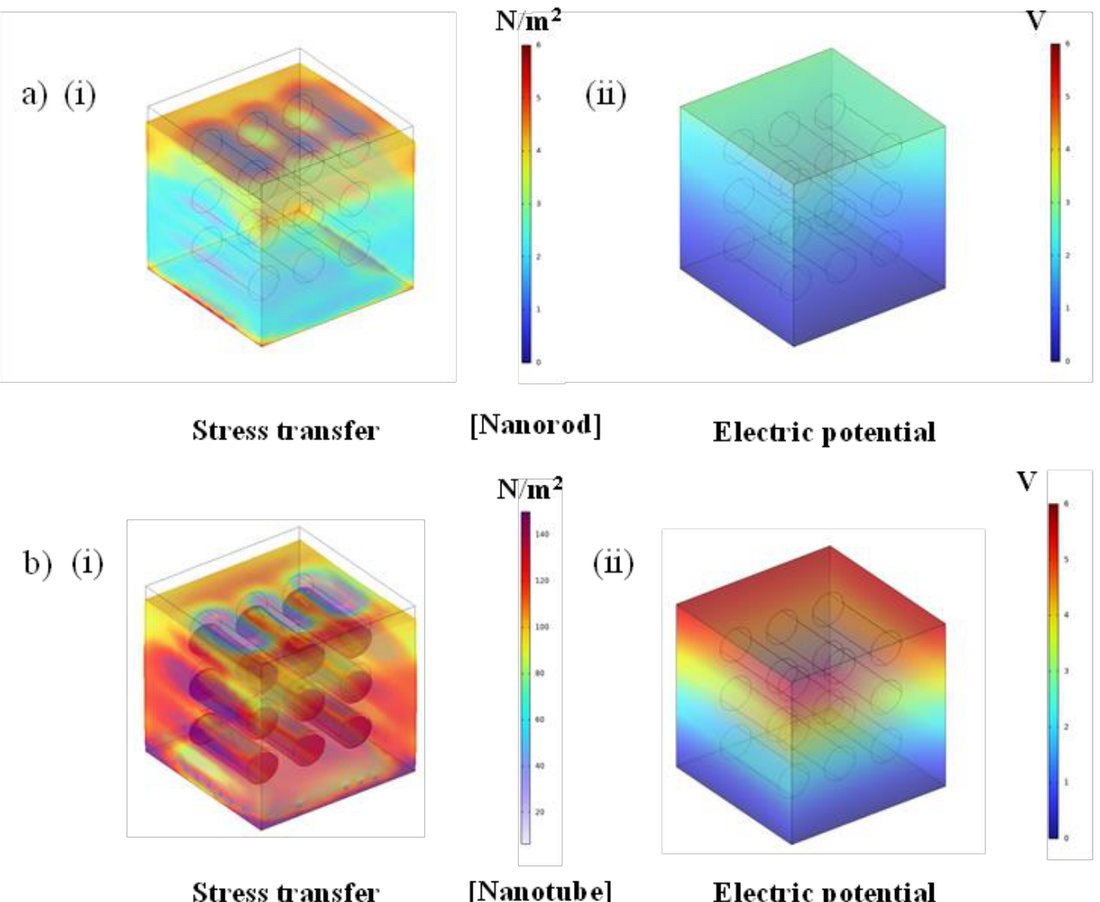
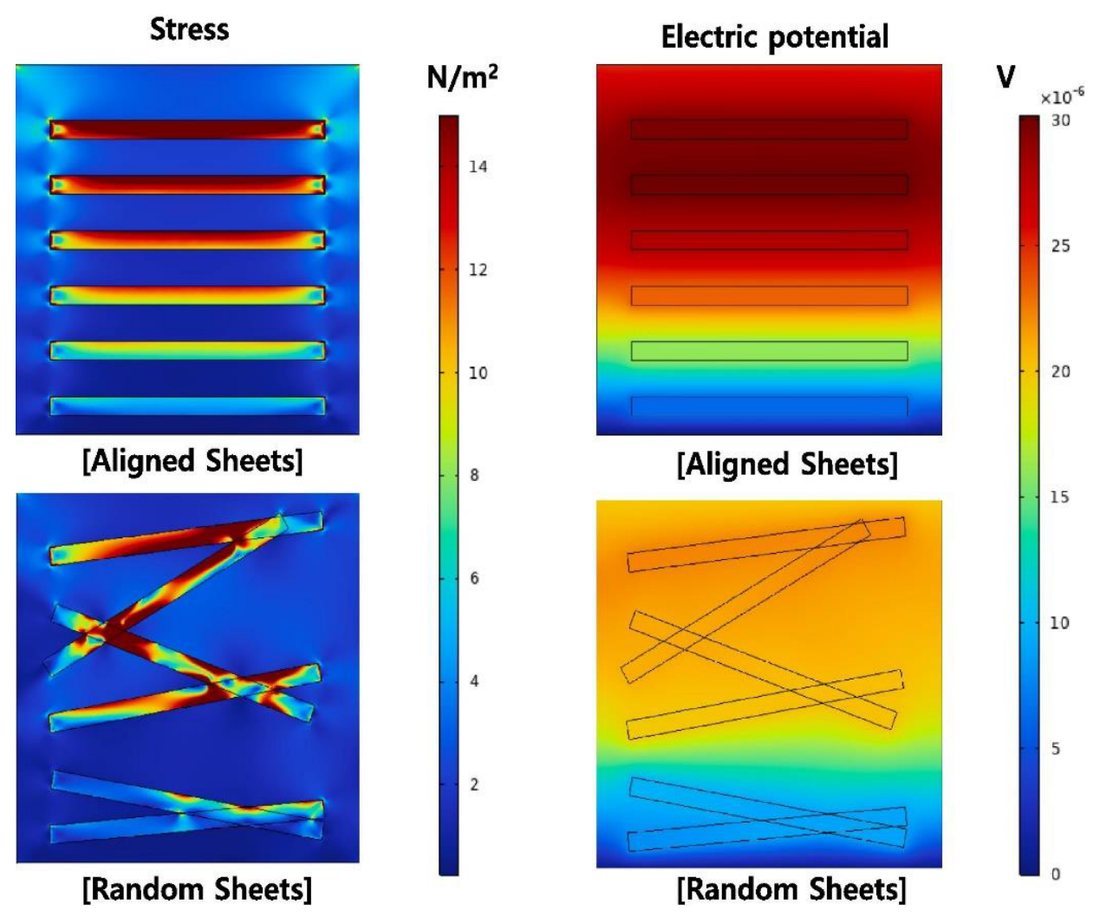
We run DFT and COMSOL in-house, from the electronic structure of atoms to stress and electric potential across whole devices. In 13 of our published papers these calculations explain why our materials and devices behave as they do. Molecular dynamics (MD) is coming soon.
Why does this material behave this way?
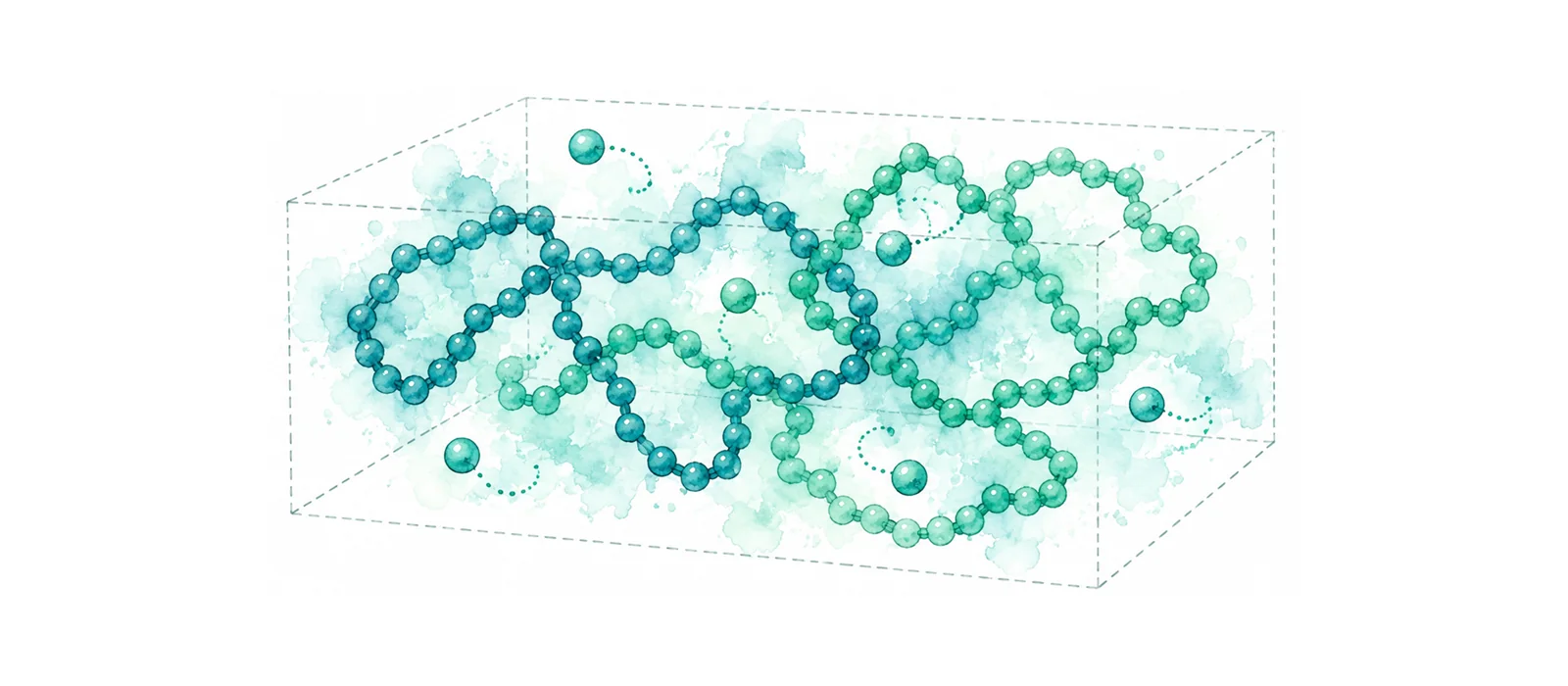
How do molecules and ions move and pack?
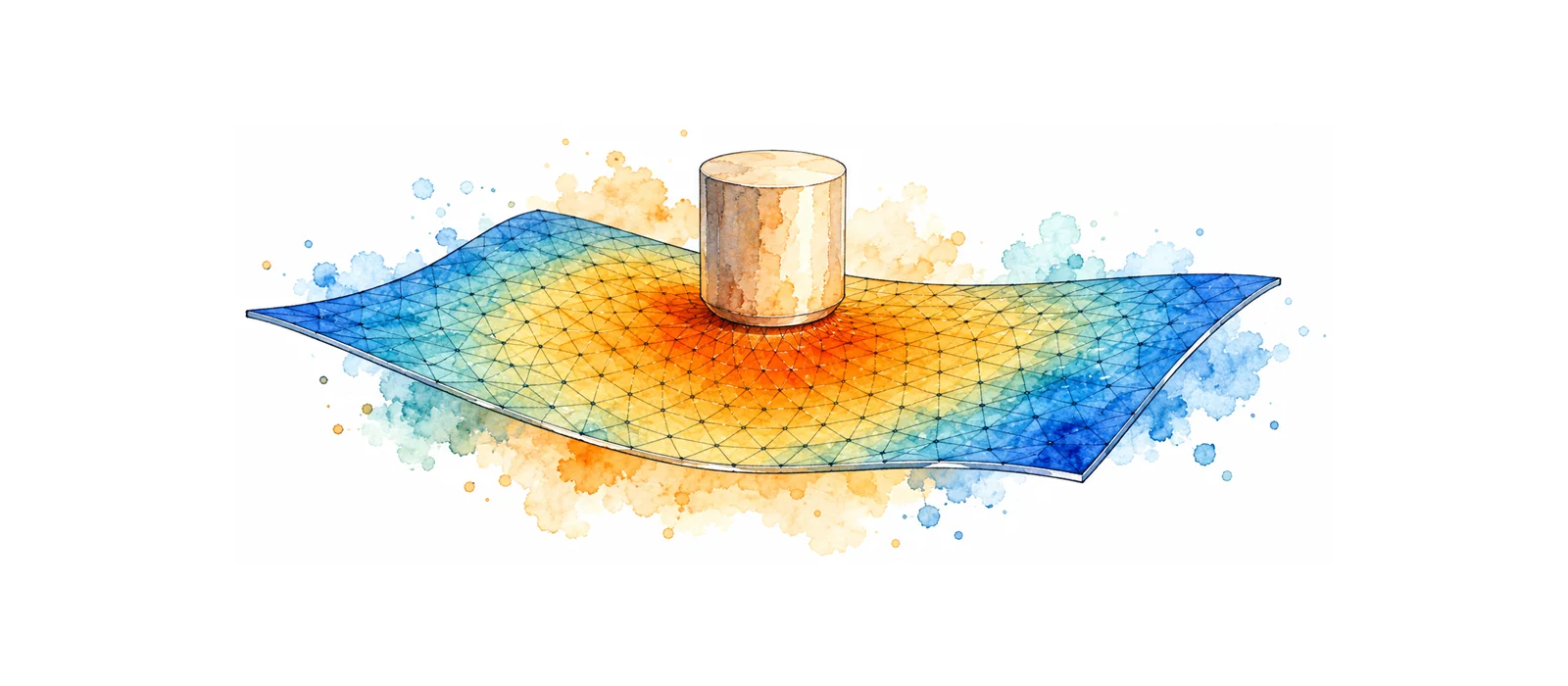
How does the device respond to force, charge and ions?
Used in our published papersAlso available


DFT: dipole moment 3.2 D → 11.0 D (3.4×) · COMSOL: higher piezoelectric potential under load · Advanced Composites and Hybrid Materials
DFT: MnO₂ interacts with oxygen first, shielding MXene from oxidation · Advanced Composites and Hybrid Materials
DFT: charge-transfer mechanism at the contact interface · Nano Energy
DFT: the metallic Ti–C backbone and O/F terminations work together for fast electron transport · ACS Applied Materials & Interfaces
DFT: glucose adsorption (−0.82 eV) and the electronic change it causes on the sensing surface · Micromachines
DFT: stronger charge redistribution at the exposed g-C₃N₄/PTFE contact · COMSOL: an electrostatic model reproduces the voltage trend · Chemical Engineering Journal
DFT: Au₁₃ on NiO(100) lowers the work function by 1.47 eV (7.38 → 5.91 eV) · Chemical Engineering Journal
DFT: charge builds up at the Fe–O–ciprofloxacin binding sites of the MIL-53(Fe) slab · RSC Advances
DFT: Fe substitution adds shallow Fe 3d states at the band edges · Journal of Alloys and Compounds
COMSOL: why hollow nanotubes raise piezoelectric output · Chemical Engineering Journal
DFT: FAPbI₃ fillers reshape the electrostatic potential of PVDF · COMSOL: charge distribution in the TENG · Advanced Functional Materials
DFT: Y–Zr co-doping narrows the band gap and gathers electrons at metal–nitrogen sites · Analytica Chimica Acta
COMSOL: crack growth under tension explains how the printed sensor changes resistance · Nanomaterials
Joint research and commissioned calculations are also possible. smlim@jbnu.ac.kr ↗
Korean patents filed and granted through the JBNU Industry-Academic Cooperation Foundation.
Partnerships with leading research institutions worldwide.
35 instruments for fabrication, processing and measurement.
A one-minute arcade built from what we do every day. Steer the print head along a moving roll-to-roll film, lay a conductive trace across the pads, lift over dust, thread the cracks, and keep an eye on your ink.